

Construction & design of your packaging
Do you need help with the construction and design of your packaging solution? Of course, we at Hässlers can help you through the whole process!
Whether you need menus, carrier bags or other printed materials - or want to brainstorm packaging design ideas - you'll benefit greatly from using us as a resource early in the process.

From idea to message and finished product
We know from experience that it is a great advantage if we are involved early in the design phase. We will help you to combine your design ideas and the message to be conveyed with the right construction of your product.
With combined efforts and the right resources, we can develop the optimal design solution right from the start. We also offer 3D visualisation proofs to give you an idea of what the final product will look like as early as possible.
The packaging journey
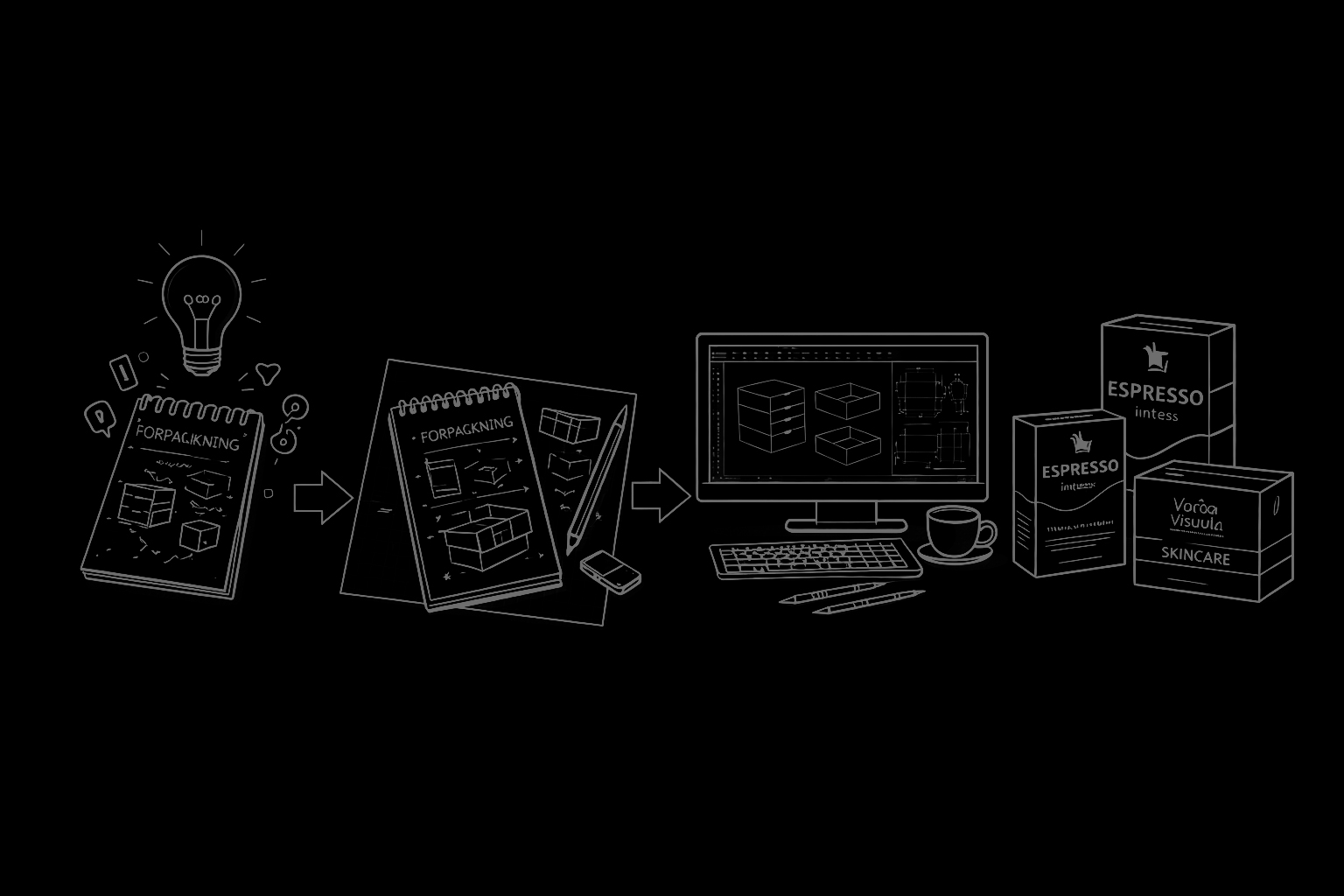
 Working on packaging always starts with an idea. The idea may arise from a need - to protect a product, simplify handling or strengthen a brand. At this stage, the target group, usage situation, sustainability requirements, logistics and market position are analysed. It also defines the message the packaging should convey: exclusivity, durability, functionality, playfulness or simplicity.
- The next step is concept development. The idea is concretised through sketches, mood boards and simple models. Form, opening function, choice of materials and graphic surface are tested. In parallel, the communicative expression is shaped - colours, typography and visual elements that together carry the brand's identity. The packaging should not only protect the contents, but also attract and inform.
-
Once the concept is finalised, work moves on to design and technical development. Exact measurements are taken, materials specified and CAD drawings created. This ensures that the packaging is production-friendly, stackable, transport-efficient and cost-effective. Prototypes are developed to test function, durability and user experience.
-
Next, graphic design is integrated with construction. Original files are produced, printing techniques are chosen and colours are quality assured. Every detail - from logo placement to information hierarchy - is carefully scrutinised to ensure the message is clear and consistent.
- Finally, the packaging goes into production. Materials are die-cut, printed and assembled. The result is a finished product that combines function, aesthetics and communication. The original idea has now become a tangible expression - a package that protects the contents, conveys the brand's message and creates value in the meeting with the customer.
 Working on packaging always starts with an idea. The idea may arise from a need - to protect a product, simplify handling or strengthen a brand. At this stage, the target group, usage situation, sustainability requirements, logistics and market position are analysed. It also defines the message the packaging should convey: exclusivity, durability, functionality, playfulness or simplicity.
 The next step is concept development. The idea is concretised through sketches, mood boards and simple models. Form, opening function, choice of materials and graphic surface are tested. In parallel, the communicative expression is shaped - colours, typography and visual elements that together carry the brand's identity. The packaging should not only protect the contents, but also attract and inform.
 Once the concept is finalised, work moves on to design and technical development. Exact measurements are taken, materials specified and CAD drawings created. This ensures that the packaging is production-friendly, stackable, transport-efficient and cost-effective. Prototypes are developed to test function, durability and user experience.
 Next, graphic design is integrated with construction. Original files are produced, printing techniques are chosen and colours are quality assured. Every detail - from logo placement to information hierarchy - is carefully scrutinised to ensure the message is clear and consistent.
From idea to finished product: is a packaging development process where creativity, technology and strategy meet.
See some examples from previous productions for inspiration

Residential binder

Ring binder in PP

Annual special edition Le National

Product packaging for bed linen

Influencer box for cans
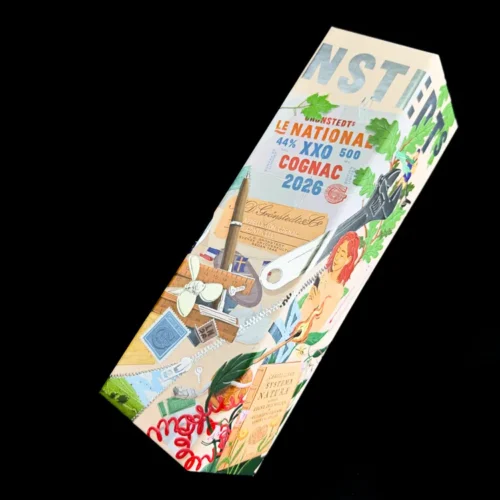
Box with a magnetic clasp

Imitation leather notebook
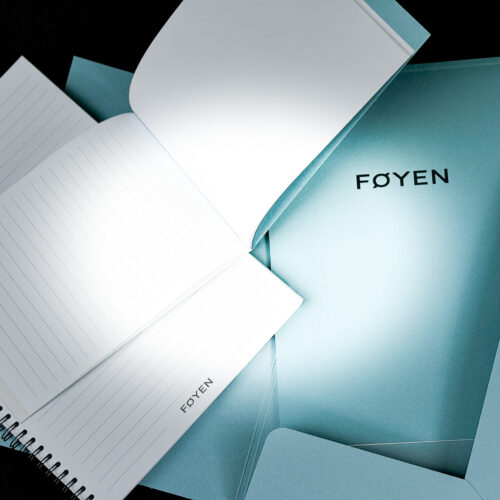
Kit with folders and notebooks
 Swedish
  English
  Czech
Czech